
Key Takeaways
-
- Nervous System Reset: Yoga stimulates the Vagus Nerve, switching your body from “Fight or Flight” (stress) to “Rest and Digest” (recovery).
-
- Biological Calm: Science shows yoga naturally lowers Cortisol (the stress hormone) and boosts GABA, your brain’s natural anti-anxiety chemical.
-
- Interrupts Overthinking: Balancing and focus-heavy poses force your brain out of “rumination” loops and into the present moment.
-
- Somatic Release: We store emotional stress in our muscles (especially the hips and jaw); yoga helps physically “unplug” and release this tension.
-
- Mindful Awareness: By practicing Interoception, you learn to recognize stress signals in your body before they become overwhelming.
We live in an era of “hurry.” Between the constant pings of notifications, the pressure of career milestones, and the mental load of daily life, our brains are often stuck in a state of high alert. We’ve become experts at “doing,” but we’ve forgotten the art of “being.”
While yoga is often celebrated for its ability to tone muscle or increase flexibility, its most profound transformation happens within the mind. For many, the yoga mat isn’t just a place to stretch, it’s a sanctuary where they can reconnect with a sense of peace.
In this blog, we will discuss how a consistent yoga practice works behind the scenes to support your mental health.
How Yoga for Mental Health Rewards Your Brain
To understand why yoga is such a potent tool for emotional well-being, we have to look past the poses and into the human nervous system. While it feels like magic, the “yoga high” is actually a result of specific biological shifts triggered by movement and breath.
Understanding the Autonomic “See-Saw”
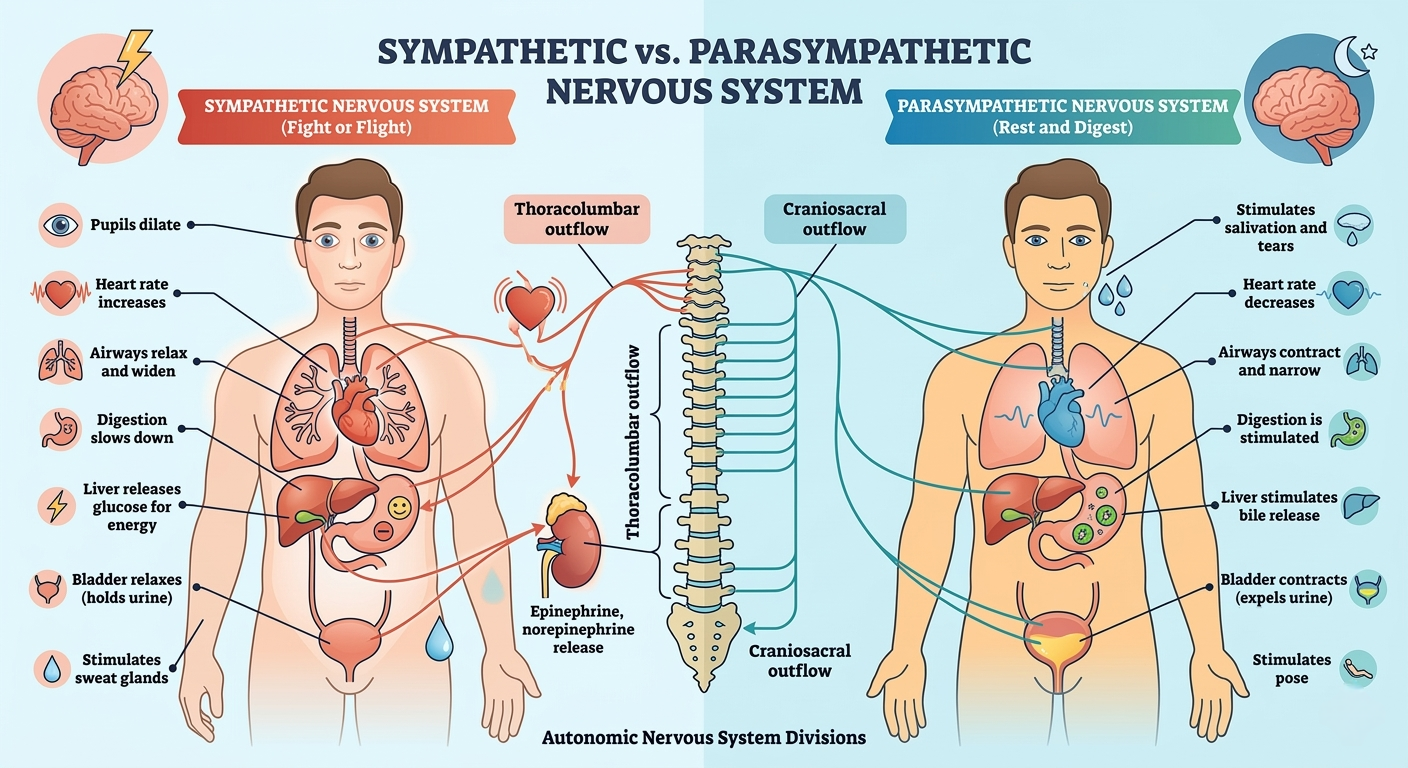
The Autonomic Nervous System (ANS) governs everything your body does automatically, from your heartbeat to your digestion. It operates through two primary branches that function like a see-saw:
-
- The Sympathetic Nervous System (Fight or Flight): This branch prepares you for action. In the modern world, this is triggered by work deadlines, traffic, or even social media notifications. This leads to chronic stress and anxiety.
-
- The Parasympathetic Nervous System (Rest and Digest): This is your body’s natural braking system. It slows the heart rate, aids digestion, and allows the mind to recover.
The Vagus Nerve: Your Body’s Internal Reset Button
The bridge between these two states is the Vagus Nerve. As the longest cranial nerve in the body, it acts as a “superhighway” between the brain and the internal organs.
When you practice deep, diaphragmatic breathing, a core component of yoga, you physically stimulate the Vagus Nerve. This sends an immediate “all-clear” signal to the brain. It shifts the see-saw from a state of high alert (Sympathetic) back to a state of recovery (Parasympathetic).
The Chemistry of Zen: Cortisol and GABA
Yoga doesn’t just change how you feel, it changes your blood chemistry and brain activity. Two key chemicals play a major role here:
-
- Lowering Cortisol: Chronic stress keeps the hormone cortisol at dangerously high levels, which can lead to brain fog and emotional exhaustion. Regular yoga practice has been scientifically proven to “wring out” the body’s stress response, significantly lowering cortisol levels.
-
- Boosting GABA: Yoga has been shown to increase levels of Gamma-aminobutyric acid (GABA). This neurotransmitter acts as the brain’s natural “anti-anxiety” chemical, helping to inhibit over-excited neurons. Higher GABA levels are directly associated with improved mood and decreased anxiety.
Check out this Reddit thread that discusses the benefits of yoga for mental health in great detail.
How Yoga for Mental Health Helps You Break the Cycle of Overthinking
While the physical practice of yoga calms the body, its ability to act as a “pattern interrupt” for the mind is what truly supports long-term mental resilience. For many, the greatest challenge isn’t a tight hamstring, but a “loud” mind that refuses to quiet down.
The Trap of Rumination
Most of our mental exhaustion comes from rumination, the habit of obsessively replaying past events or worrying about future “what-ifs.” This mental loop creates a groove in the brain, making it easier to slip into states of anxiety or low mood.
Rumination lives in the “Default Mode Network” of the brain, the area that is active when we are daydreaming or self-reflecting, but often leads to over-analysis.
The Power of “Focus-Heavy” Poses
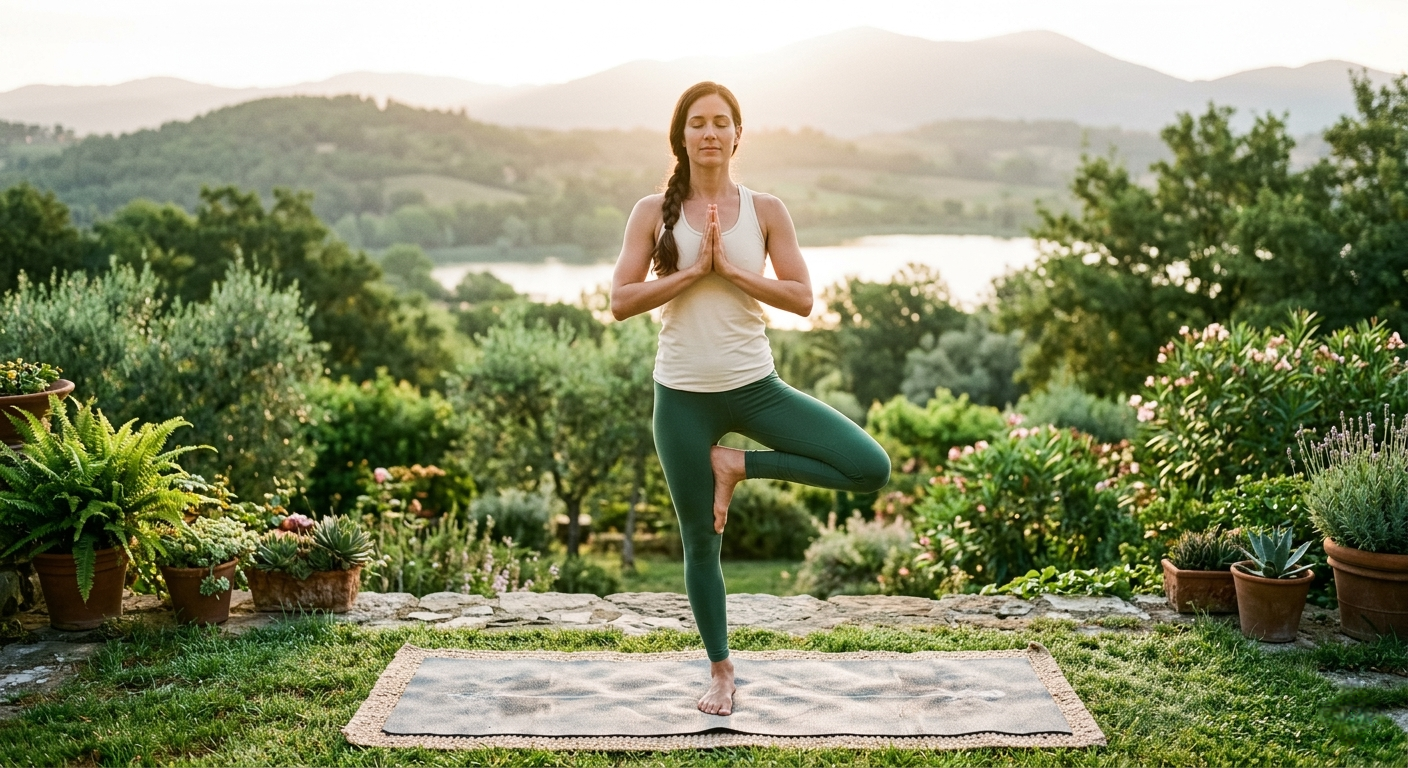
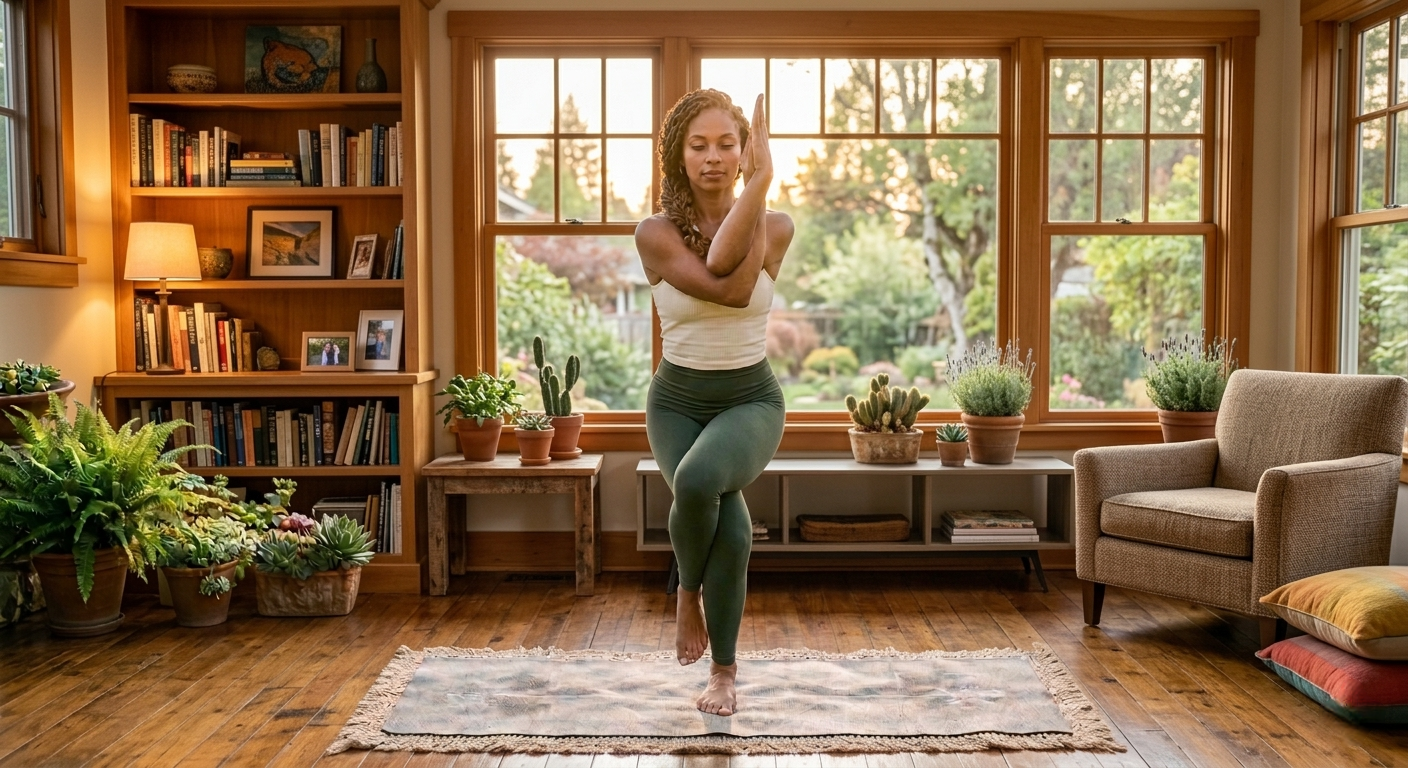
Yoga forces the brain to switch its “operating system.” When you are asked to perform a balance-intensive posture, such as Tree Pose (Vrksasana) or Eagle Pose (Garudasana), your brain can no longer afford to multitask.
To keep you from falling over, your cerebellum and prefrontal cortex must work in perfect harmony. You have to focus on:
-
- The Drishti: A single, unmoving focal point for your eyes.
-
- The Foundation: The micro-adjustments in your standing foot.
-
- The Core: The internal stability keeping your spine tall.
In these moments, the brain physically cannot maintain a loop of overthinking and stay balanced at the same time. The “present moment” isn’t just a spiritual concept, it becomes a physical necessity.
The “Moving Meditation” Effect
This shift is often called Moving Meditation. By tethering the mind to the physical sensations of the body, the stretch in the side body, the heat in the thighs, the flow of the breath, we give the analytical “thinking mind” a much-needed break.
This process allows the brain to enter a Flow State. When you move through a sequence of poses (Vinyasa), the focus shifts from thinking about the movement to simply being the movement.
This provides a profound sense of relief, teaching the brain that it is possible to exist without the constant noise of a “mental to-do list.” Over time, this makes it easier to find that same stillness when you are off the mat and facing the stresses of daily life.
How Yoga for Mental Health Releases Stored Tension
We often think of stress as something that happens only in our heads, but our bodies are actually the primary record-keepers of our emotional lives. As famously noted in the field of trauma research, “the body keeps the score.”
If you’ve ever noticed a tight jaw after a difficult conversation or a “heavy” feeling in your chest during a stressful week, you’ve experienced somatic tension.
The Physical Map of Emotion
When we experience stress, our muscles instinctively contract to protect us, a remnant of our evolutionary “armor.” If that stress isn’t processed, those contractions become chronic. This emotional stress often manifests in specific “hot spots” throughout the body:
-
- The Hips: Often referred to as the “junk drawer” of emotions, the hips store tension related to our fight-or-flight response and suppressed frustration.
-
- The Shoulders and Neck: The classic site for carrying the “weight of the world” or professional burdens.
-
- The Jaw and Face: A common area for suppressed communication or “gritting your teeth” through a tough situation.
What are the Poses for Emotional Unloading
Yoga uses targeted physical shapes to “unplug” these areas of stored tension. By holding specific poses for extended periods, we send a signal to the deep connective tissues (fascia) that it is finally safe to let go.
-
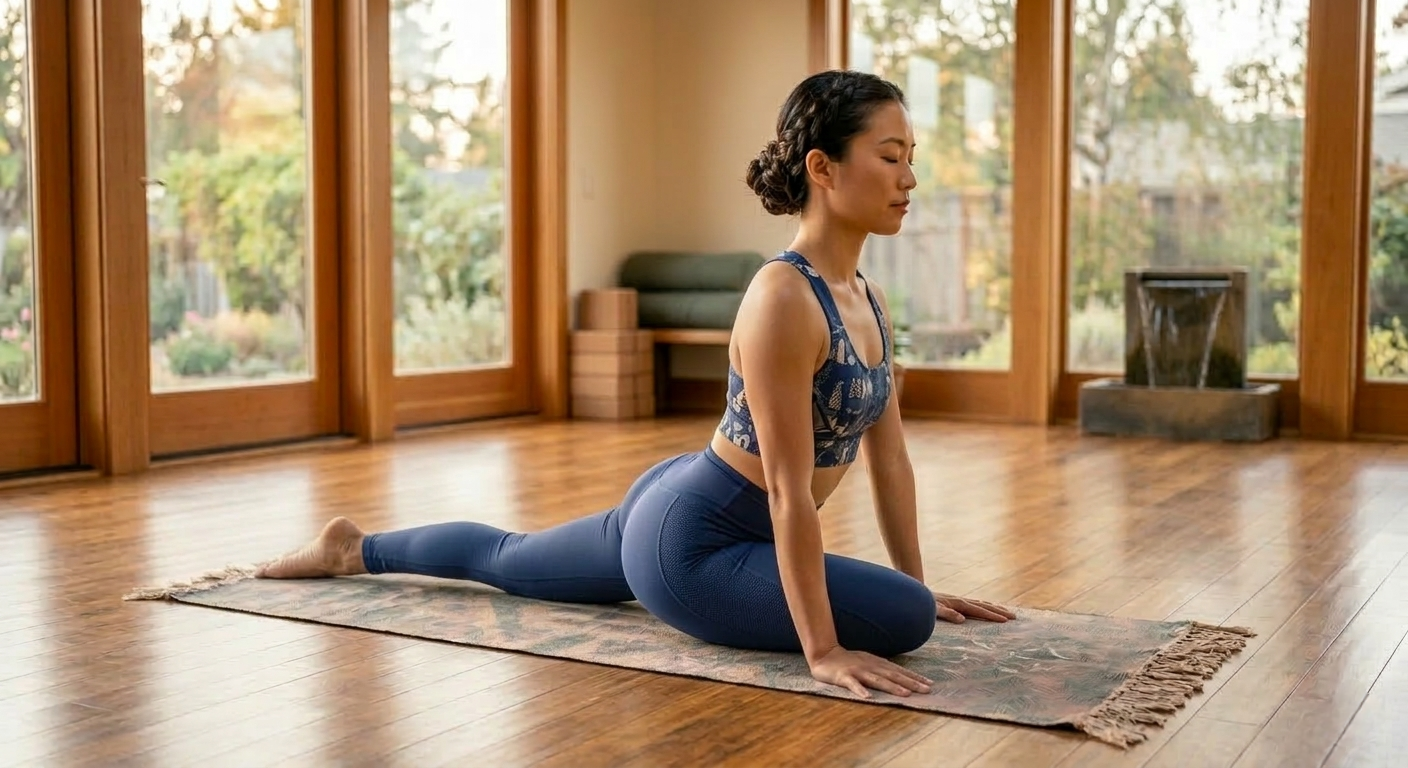
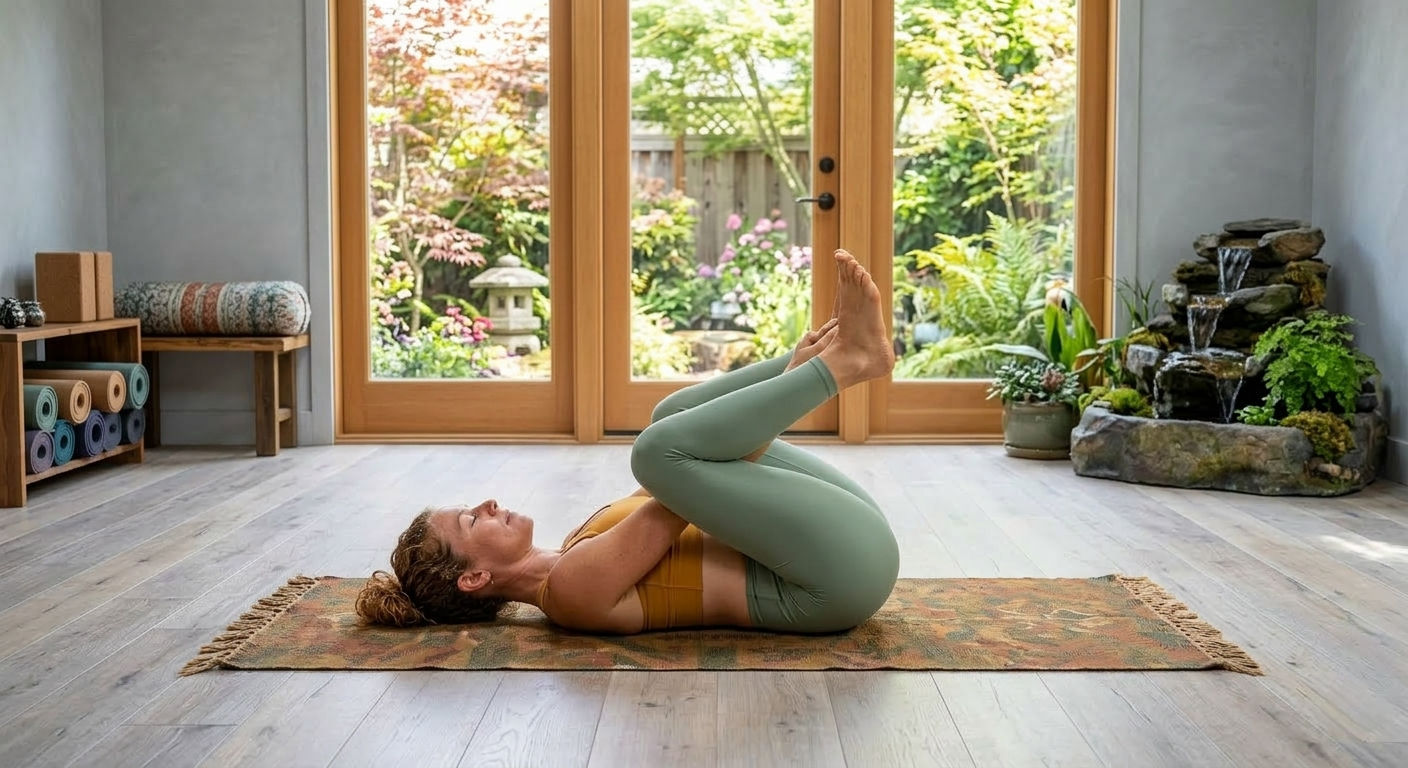
- Hip Openers (e.g., Pigeon Pose or Happy Baby): These poses target the psoas muscle, which is directly linked to the adrenal glands and our startle response. Deeply opening the hips can often lead to a profound sense of emotional relief.
-
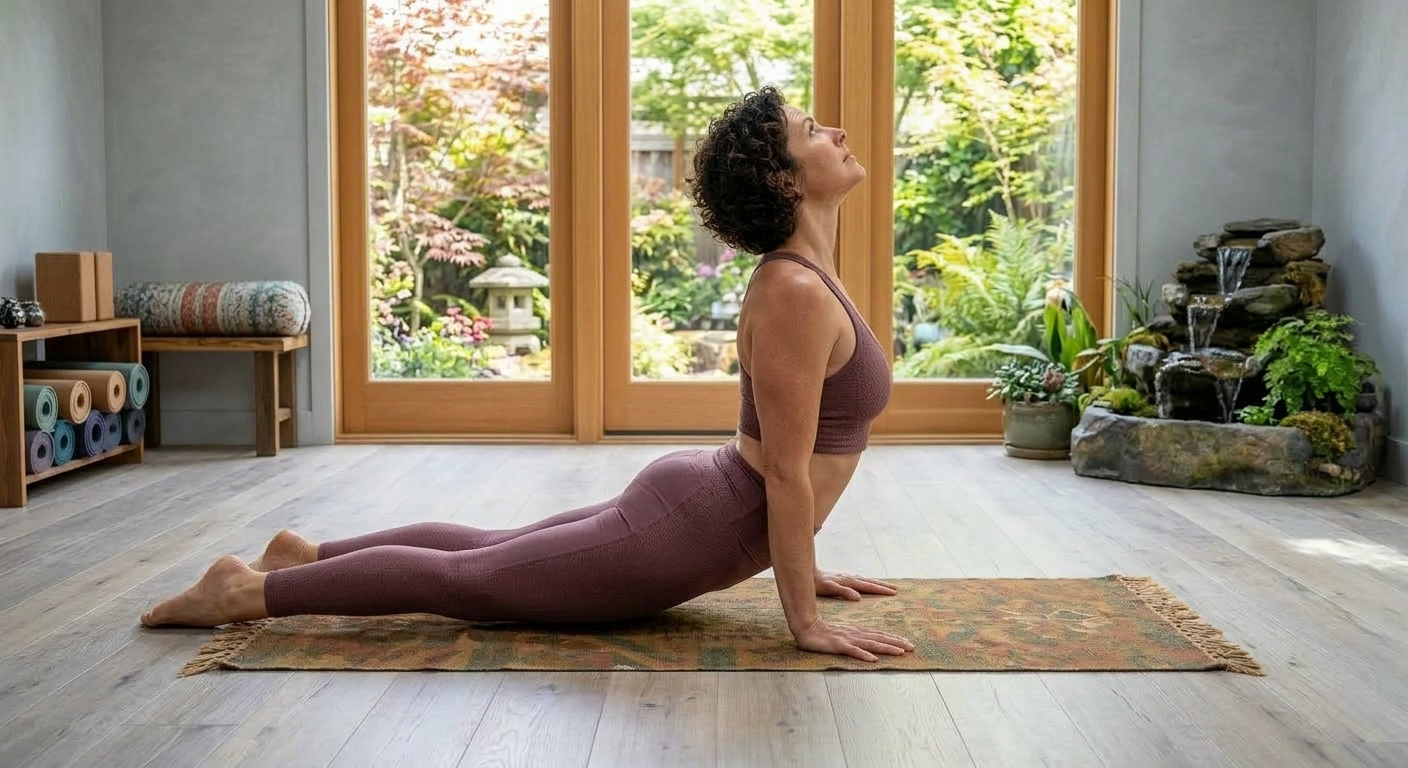
- Heart Openers (e.g., Cobra or Bridge Pose): These counteract the “collapsed” posture we take when we feel protective, sad, or overwhelmed. By physically opening the chest, we allow for deeper breathing and a sense of “opening up” to the world again.

This Helps You Cultivate Interoception
The ultimate goal of this somatic work is to improve Interoception, your “sixth sense” that allows you to feel and understand what is happening inside your body.
Chronic stress often causes us to “disassociate” or go numb to our physical sensations. Yoga re-establishes this vital connection. As you learn to sense the subtle difference between a “good stretch” and “painful tension,” you begin to recognize the early warning signs of stress in your daily life.
This heightened awareness allows you to respond to your needs, perhaps by taking a deep breath or stepping away from a screen, before the tension escalates into a mental health crisis.
Here is a Reddit thread where people have discussed how to release somatic tension from their bodies.
Practical Tips for a “Mindful” Yoga for Mental Health Practice
Knowing the science is the first step, but the true transformation happens when you apply these principles to your movement. To maximize the mental health benefits of your practice, you don’t need to master a handstand, you simply need to shift your internal approach.
The Breath: Focus on the “Cooling” Exhale
While every breath in yoga is valuable, the exhale is your direct line to the parasympathetic nervous system. Short, shallow inhalations are associated with anxiety and the “fight or flight” response. Conversely, long, controlled exhalations signal to the brain that the “danger” has passed.
-
- The Technique: Try to make your exhale twice as long as your inhale (e.g., inhale for a count of 4, exhale for a count of 8).
-
- Benefit: This simple shift lowers your heart rate and creates an immediate “cooling” effect on a heated or anxious mind.
The Mindset: Releasing the “Perfectionist” Internal Critic
One of the biggest hurdles to mental clarity is the “perfectionist” mindset, the urge to compare your pose to the teacher’s or the person on the mat next to you. In a practice dedicated to mental health, the goal is feeling, not looking.
-
- The Shift: Instead of asking, “Does my leg look straight?” ask, “What is the quality of my breath right now?”
-
- Benefit: By letting go of the need to perform, you turn your yoga mat into a judgment-free zone. This trains your brain to be more compassionate and less critical of yourself in your daily life.
The Integration: The Power of Savasana (Corpse Pose)
It is common for students to want to skip the final five minutes of class to “get on with their day,” but Savasana is arguably the most important pose for mental health. This is the period of “non-sleep deep rest” (NSDR) where the brain processes the physical work you’ve just done.
-
- The Process: You lie completely still, eyes closed, allowing the floor to support your full weight. You aren’t “doing” anything, you are simply witnessing the stillness.
-
- Benefit: This is where mental integration happens. It allows your nervous system to fully “download” the calm you’ve cultivated. It ensures that the peace you found on the mat follows you out the door and into the rest of your day.
Conclusion
It is easy to view wellness as another “to-do” item on an already crowded schedule. But as we have explored, yoga for mental health isn’t about adding more work to your day, it’s about creating a sanctuary where the work of the world finally stops.
By understanding the biology of your nervous system, learning to interrupt the cycle of overthinking, and physically releasing stored emotional tension, you reclaim a sense of agency over your well-being.
You don’t need to be flexible, you don’t need to be “zen,” and you certainly don’t need to be perfect. You simply need to show up as you are, heavy thoughts and all, and breathe.
Take the Next Step Toward Inner Peace with Aalokam Yoga
Your journey to a calmer mind and a more resilient spirit doesn’t have to happen alone. At Aalokam Yoga, we provide a supportive, judgment-free space designed to help you reconnect with your inner stillness. Whether you prefer the energy of an in-person community or the comfort of practicing in your own home, our yoga studio has a place for you.
Ready to start your practice?
-
- Join us In-Person: Experience the grounding energy of our yoga classes in Pune and connect with our community.
-
- Join us Online: Practice from anywhere in the world with our live, interactive digital sessions.
Click Here to Contact Us to Book a Demo