India’s First Yoga Program Focused on Emotional and Mental Wellness

🧘 Yoga for Stress, Anxiety, Depression & Mental Health
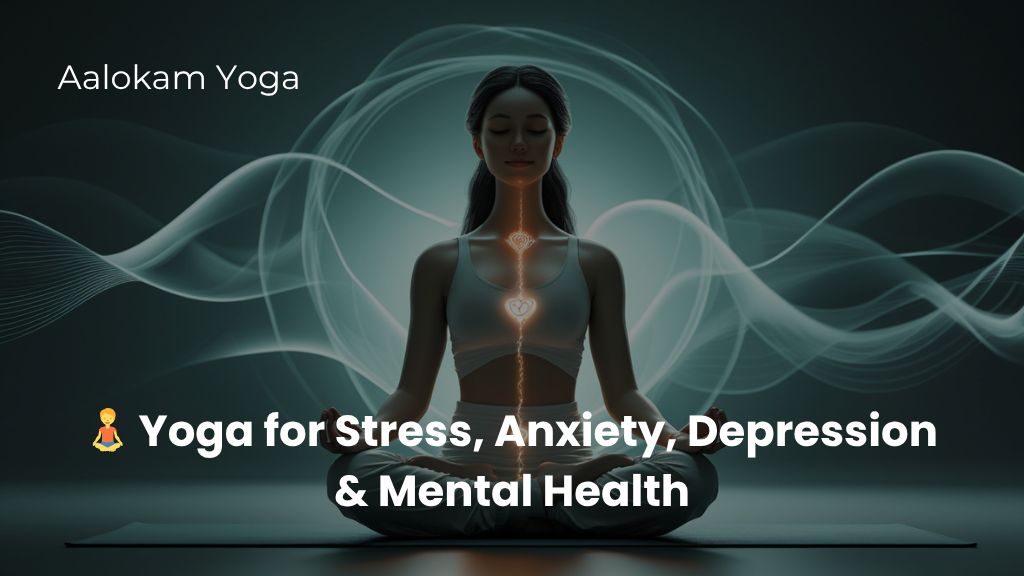
In the fast-paced world we live in, stress, anxiety, and depression have become part of daily life—often silently affecting our health, happiness, and performance. But ancient yogic wisdom offers powerful tools to heal the mind and reconnect with inner peace. Yoga provides one of the most authentic and scientific approaches especially for mental and emotional well-being.
This blog explores how yoga helps reduce stress, anxiety, and depression while enhancing mental clarity, inner balance, and emotional resilience.
Understanding Mental Disturbances: A Yogic View
Stress, anxiety, and depression are not just psychological issues—they are disturbances in the flow of prana (life energy), and imbalance in the interaction between body, mind, and emotions.
Mental health suffers when:
- The mind is restless and reactive
- Suppressed emotions build up
- The nervous system is overstimulated
- There’s a disconnection from inner awareness
Yoga helps restore balance at all these levels.
1. Asanas – Healing through the Body
Simple yogic postures help:
- Release tension from the body
- Improve nervous system function
- Open the energy channels (nadis)
Asanas:
- Shashankasana (Child’s Pose) – Calms the mind
- Setu Bandhasana (Bridge Pose) – Relieves anxiety
- Matsyasana (Fish Pose) – Opens the heart chakra
- Surya Namaskar (Sun Salutation) – Energizes and balances

“Asanas are not just physical postures. They are tools to harmonize the physical and mental dimensions.”
2. Pranayama – Regulating the Breath, Calming the Mind
Breath is the bridge between body and mind. When the breath is shallow or erratic, the mind becomes anxious. Pranayama techniques balance prana and restore calm.
Pranayamas:
- Nadi Shodhana – Balances brain hemispheres, reduces anxiety
- Bhramari – Calms the nervous system with a humming sound
- Ujjayi – Slows down thoughts and promotes inner awareness

3. Yoga Nidra – Deep Yogic Relaxation
Yoga Nidra, or yogic sleep, is a profound guided technique that takes practitioners into a deeply relaxed state between waking and sleep.
Benefits:
- Releases subconscious stress and tension
- Helps with depression, anxiety, and insomnia
- Builds emotional resilience

4. Meditation – Training the Mind
Meditative practices train the mind to become a witness of thoughts—not a slave to them.
They help:
- Reduce overthinking and emotional reaction
- Improve mental clarity and mood
- Create a deep sense of centeredness
5. Mantra & Bhakti Yoga – Healing the Heart
Chanting, mantra repetition (Japa), and devotional practices are important for emotional healing, especially when depression is rooted in loneliness or grief.
Practices like AUM chanting and Kirtan awaken higher energies and connect one with a feeling of universal support and love.

Impact of Yoga on Mental and Emotional Health
- Lowering cortisol (stress hormone)
- Improving heart rate variability (HRV)
- Enhancing alpha brain wave activity
- Reducing symptoms of depression and anxiety
- Improving sleep and emotional stability